


Herbal Elevation in Illmatic: Cannabis, Memory & Black Cultural Ritual
How cannabis moved through hip hop as a practice of survival
What place has cannabis held in Black cultural life, outside headlines and legislation?
In hip-hop, the Plant has circulated in plain sight and consistently; in cyphers, stairwells, bedrooms, project hallways. On Nas’s Illmatic (1994), cannabis appears as part of the album’s inner logic. It sits in pauses between bars, in reflections that drift and return.
When Nas Smoked, He Remembered.
Illmatic functions as a cultural record. Ten tracks documenting Queensbridge in the early ’90s: gunshots outside windows, short lifespans taken as fact, tenderness spoken carefully. Cannabis shows up inside this world as something stabilizing; a way to slow time long enough to think, to remember, to stay present.
Across the album’s ten tracks, the Plant surfaces as part of the environment.
““Life’s a b*tch and then you die, that’s why we puff L¥E,
’Cause you never know when you’re gonna go.””
For young Black men living with constant precarity, cannabis use was ritual; a way to slow things down without leaving the room.
Older Than Legalization and prohibition
Black relationships with cannabis long predate legalization. Across the African diaspora, Black people laid much of the groundwork for how the Plant came to be understood, used, and circulated in the modern world. Many cannabis histories erase that labor, replacing it with recycled lore. The result is a flattened past that turns practice into instinct and context into stereotype.
In North American cities, that groundwork didn’t disappear, it was reshaped by policing, density, and surveillance. Hip-hop didn’t invent the relationship; it gave form to what was already there.
“Choco blunts’ll make me see him drop in my weed smoke.”
Here, grief surfaces through haze. Smoke becomes a screen where memory replays.
Cannabis as Medicine
“My window faces shootouts, drug overdoses /
Live amongst no roses, only the drama /
For real, a nickel-plate is my fate, my medicine is the ganja.”
“Medicine” isn’t metaphor here. It’s how people kept themselves steady inside conditions designed to break them. Illmatic captures a cannabis culture formed under watch, passed hand to hand, understood without explanation.
Ritual, Not Recreation
“I exhale the yellow smoke of Buddha through righteous steps.”
“Packin’ like a Rasta in the weed spot.”
Nas folds multiple reference systems into his writing without stopping to explain them. The language reflects a mind pulling from what’s around him — street knowledge, diasporic echoes, borrowed phrases — the way hip-hop always has. Cannabis sits inside that mix as part of how thought moves and memory organizes itself on Illmatic.
BEFORE THE LICENSES
Decades before a legal cannabis industry emerged, the Plant moved through Black communities without protection or permission. It circulated under surveillance; shaped by raids, charges, and sentences that lingered long after the smoke cleared.
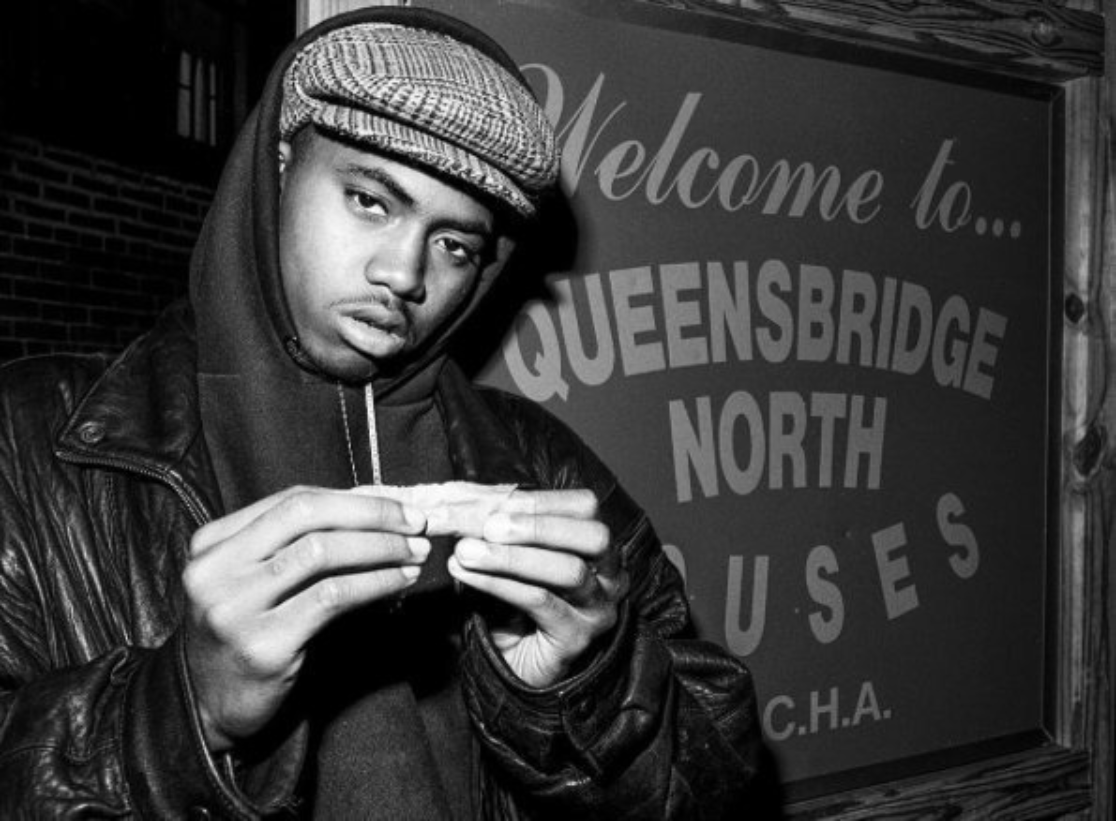
In that world, cannabis wasn’t packaged as an industry. It moved through people—sometimes commerce, sometimes comfort—handled carefully, shared deliberately, understood without explanation.
That history doesn’t show up on balance sheets. It survives elsewhere i.e. in records like Illmatic, and in the lives that shaped it.
PANGO keeps that record in view.
ON THE RECORD
Illmatic holds a version of cannabis culture that predates explanation. The references remain because they were ordinary, not exceptional.
That ordinariness is the point.