


Rhythms of Resistance
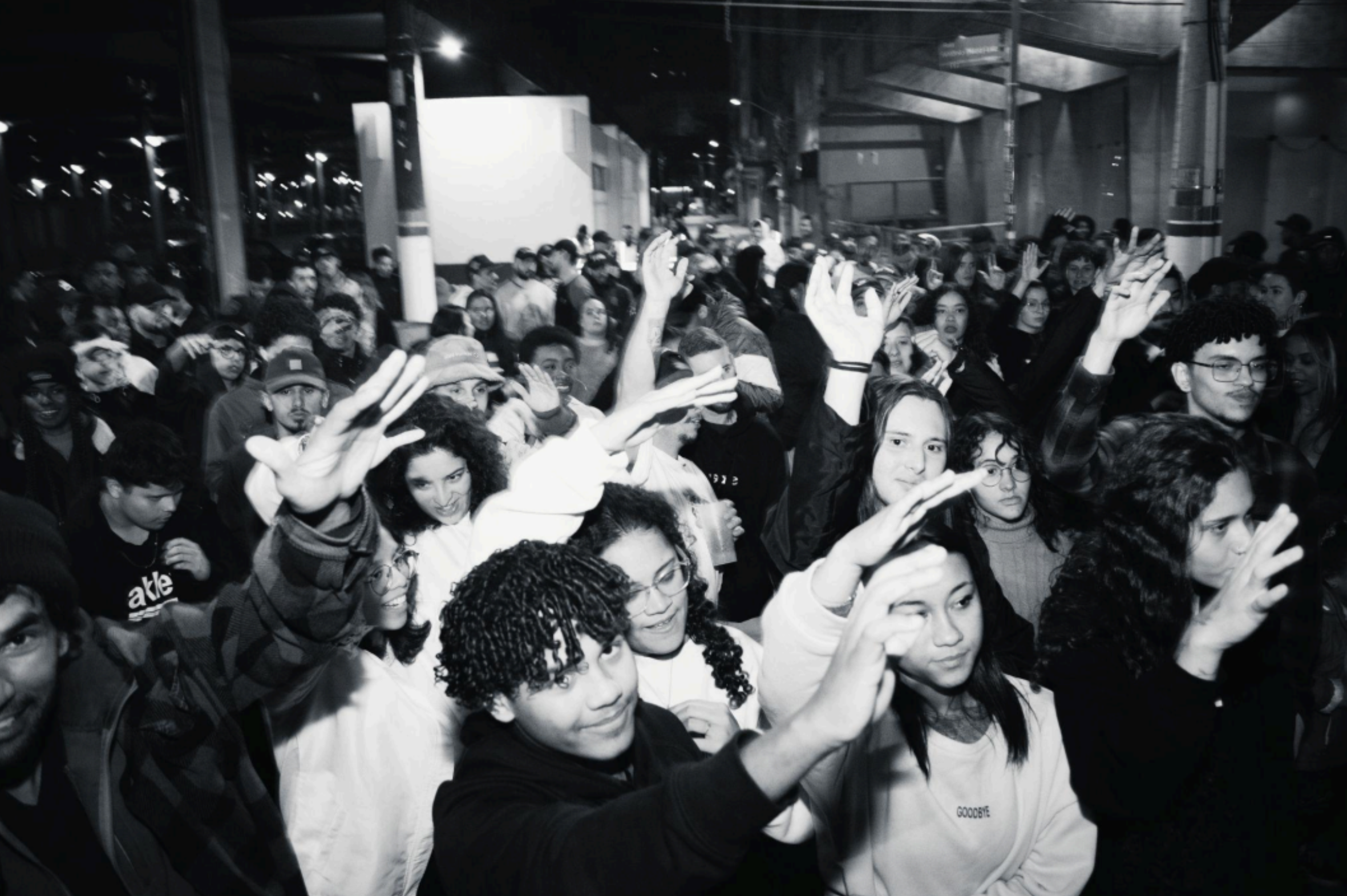
People gathering at Batalha da Alfandega. Photo by: João Carlos/ @azuos.jpg
How Hip Hop and Cannabis Activism Empower Marginalized Voices in Brazil
Every Thursday, the old bus terminal in downtown Florianópolis, a city in southern Brazil, transforms into the epicenter of hip hop culture with the "Batalha da Alfândega" (Customs Battle) attracting enthusiasts for freestyle rap battles starting at 7 PM. Founded in 2009, the Batalha da Alfândega has become a national reference in the improvisational rap scene, inspiring the 2016 documentary A Causa é Legítima ("The Cause is Legitimate – The Customs Battle is the Right to the City"), directed by Ricardo Pessetti. The project began organically, promoted by a group of MCs who, driven by their passion for rhyme, helped to proliferate other rap battles across various parts of Florianópolis, including neighborhoods like Trindade, Canasvieiras, Ingleses and Campeche.
Brazilian hip hop, which emerged in the favelas as a response to social inequalities, has always carried the weight of protest and resistance in its lyrics. In Florianópolis, this cultural expression found a stage in the Batalha da Alfândega, where the struggle against the criminalization of Black and marginalized youth intersects with the advocacy for cannabis legalization. What was once a movement limited to university circles now echoes through the streets, demonstrating that the fight for decriminalization is also a class struggle.
For people like Vini Lanças, a prominent figure in the local anti-prohibition movement, the discussion about cannabis goes beyond the simple debate over legalization. "Ten years ago, the movement was dominated by white university students. Today, it belongs to the kids from the streets," he says. According to Lanças, the real issue at stake is the denunciation of a system that uses prohibition as a pretext to criminalize and oppress Black and poor communities.
Within the Batalha da Alfândega, many people gather, each with remarkable stories that reflect their experiences and struggles. These gatherings go beyond the rhymes, revealing the richness of experiences of those who use hip hop as a tool for expression and resistance.
DRE
One of the participants in the Batalha da Alfândega is Andressa Araújo, a 28-year-old known artistically as Dre. “Andressa plays an important role as a citizen, but Dre goes beyond being an artist; she is an MC and activist in the hip hop scene,” she says.
Dre began her career at 19 at the Batalha da Conselheiro in São Paulo, Brazil's largest city, in 2015. After standing out in regional and state competitions, she moved to Itajaí, a city in the southern state of Santa Catarina, where she began teaching hip hop workshops in public schools. In 2018, Dre won the state championship in Santa Catarina and was the runner-up in the interstate competition, becoming the third woman to participate in a national freestyle competition.
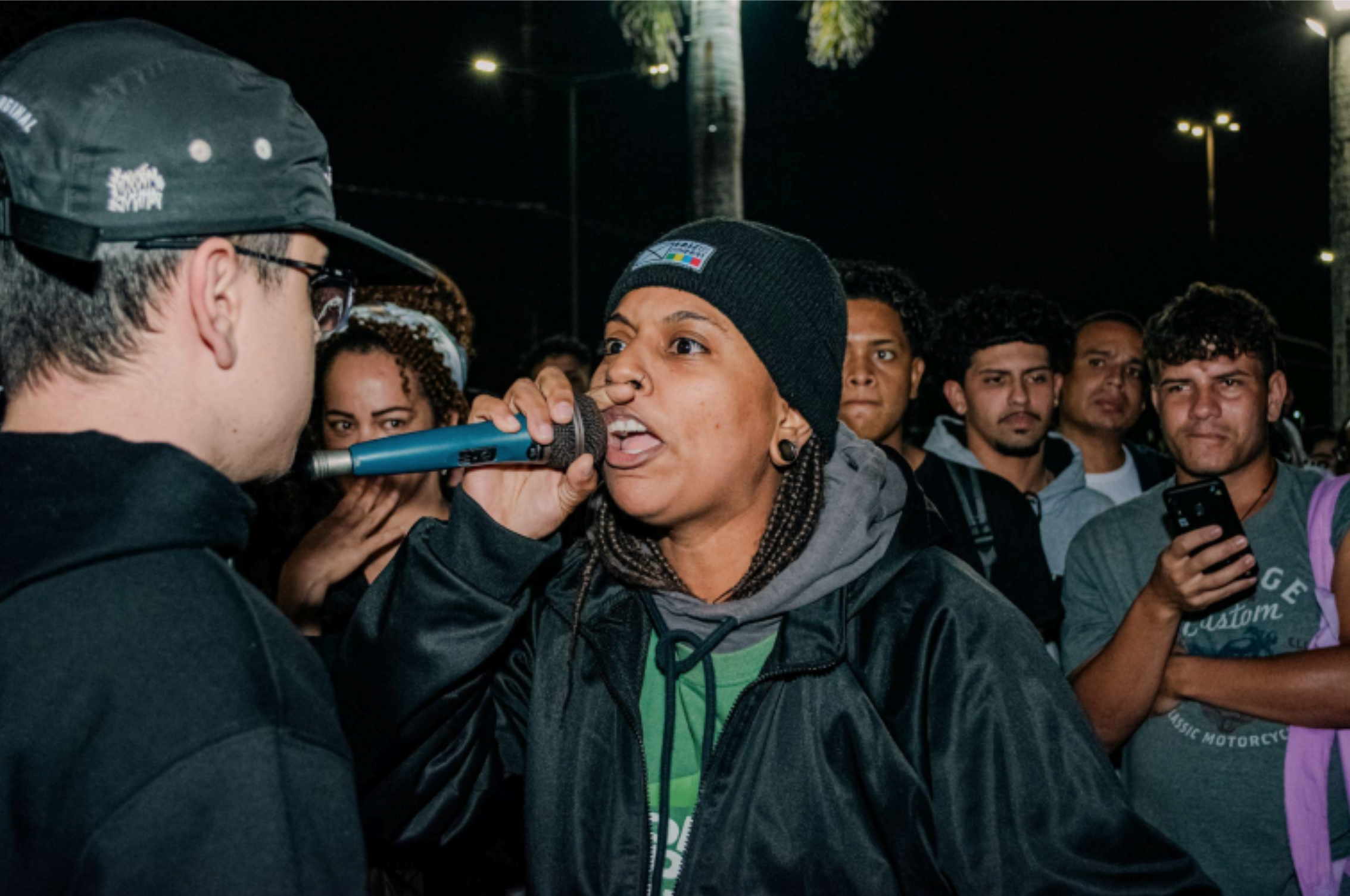
Andressa Araújo, known as Dre. Photo by: João Carlos/ @azuos.jpg
Settling in Florianópolis, Dre became a reference in rap, accumulating various titles, including the regional championship of Greater Florianópolis (2022/2023) and the four-time champion of the Batalha da Marcha da Maconha Floripa (2021/2024). The latter is especially significant, as the Marcha da Maconha (Cannabis March) is an event that unites hip hop culture with the cause of cannabis legalization.
“With the popularization of rap battles and the criminalization of cannabis, many see us as criminals, invaders, or graffiti artists,” Dre comments. She highlights the importance of cannabis for her creativity, something she considers crucial in rap. “In a rap battle, you need to be creative and calm. Someone who is drunk can’t do that, but someone who is high can rhyme in a light, free, and relaxed way.”
Dre explains that, due to the illegality, the cannabis available is often of low quality and can pose health risks, such as mold. However, she emphasizes the positive role cannabis plays in her life, stating that “it helps a lot with my creativity and with anxiety, which can be an obstacle in daily activities.”
She also mentions that her mother suffers from fibromyalgia, a condition that causes widespread muscle pain. Dre is committed to getting authorization for her mother to use medical cannabis as part of her treatment.
WG
Wagner Goulart, known in the scene as WG, is a 28-year-old IT technician who found in rap a form of expression and personal transformation. Born in São Paulo, WG always had a passion for funk music, but it was the collaboration between MC Guimê and Emicida in the song "País do Futebol" that sparked his interest in rap and rap battles. Starting in 2014, he began to engage more deeply with freestyle culture, exploring his skills and dedicating himself to the art.
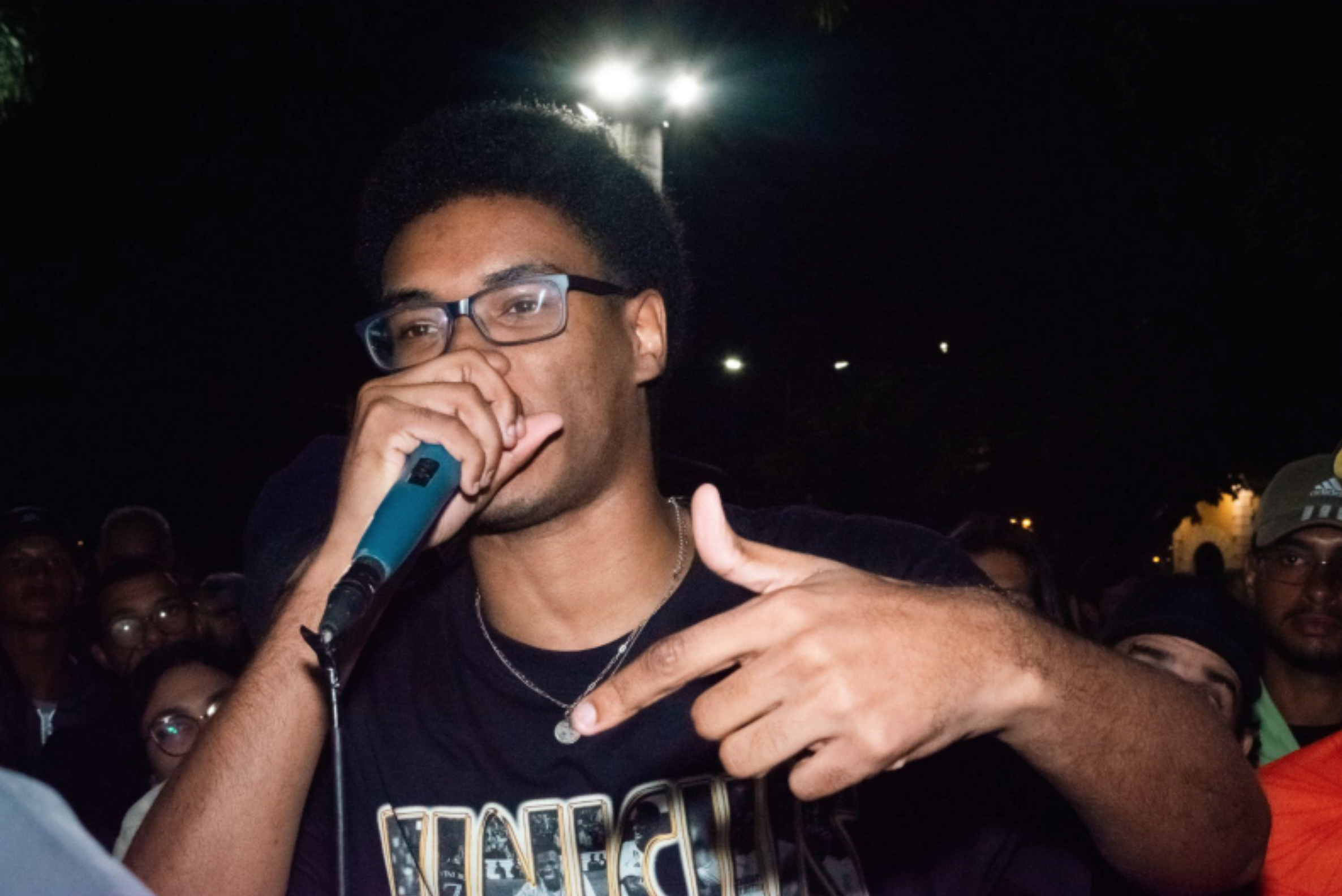
Wagner Goulart, known as WG. Photo by: João Carlos/ @azuos.jpg
After moving to Balneário Camboriú, a city known for its beaches and nightlife in southern Brazil, Wagner encountered the local rap battle scene. A bet with a friend led him to the stage for the first time, and since then, he hasn’t stopped. “The feeling of rapping is indescribable, especially in a space where we are not often seen, and as a Black man in southern Brazil, I face additional challenges, including racism.” He recounts how during the battles, people paid attention to what he had to say. “It was an indescribable energy, something truly beautiful,” he says.
Despite his deep connection with rap and hip hop culture, WG chooses not to smoke or use cannabis, a personal decision that he insists on maintaining, even in an environment where cannabis is often associated with the lifestyle and creativity of artists.
He believes that rap can steer young people away from the wrong path and offer hope and inspiration, just as it did for him. “Rap shows that it’s possible to leave the streets and succeed, just like many artists who came from humble beginnings,” he declares. Despite the ongoing challenges and discrimination the movement still faces, WG is convinced that rap is growing and reaching more people.
“I see rap almost like a religion because it transformed me and helped me overcome depression and social phobia.” The change in his life also reflected in his family relationships, with his parents now seeing him differently, and WG dedicating himself to supporting other young people to find in rap a way to change and grow.
Nega Bula
Nega Bula, also known as Luiza Nascimento, is recognized for her strength and striking presence, reflecting the power of Black women. With an authentic style and powerful message, Nega Bula is an MC and songwriter who uses her music to address crucial issues like equality, respect, and female empowerment.
“My registered name is Luiza, but on stage, I’m Nega Bula”, the name ‘Bula’ is a reference to a 'prescription,' which in Portuguese refers to the informational leaflet that comes with medication, explaining how to use it properly. In her case, it symbolizes the prescription of empowerment and culture that I deliver through my lyrics. She moved to Florianópolis almost five years ago from Rio Grande do Sul, a state in southern Brazil, where she began her rap journey in 2010. Initially participating in battles and events with her sisters, she eventually decided to pursue a solo career.
For Nega Bula, rap is much more than a form of artistic expression; it is a powerful tool in the fight against racial and social oppression. She sees rap as "rhythm and poetry" and a revolution through words, offering a platform for empowerment and social transformation. “Rap is a way to show that we don’t need to change to fit into society’s standards. It is a space to empower yourself and show who we really are,” Nega Bula affirms.
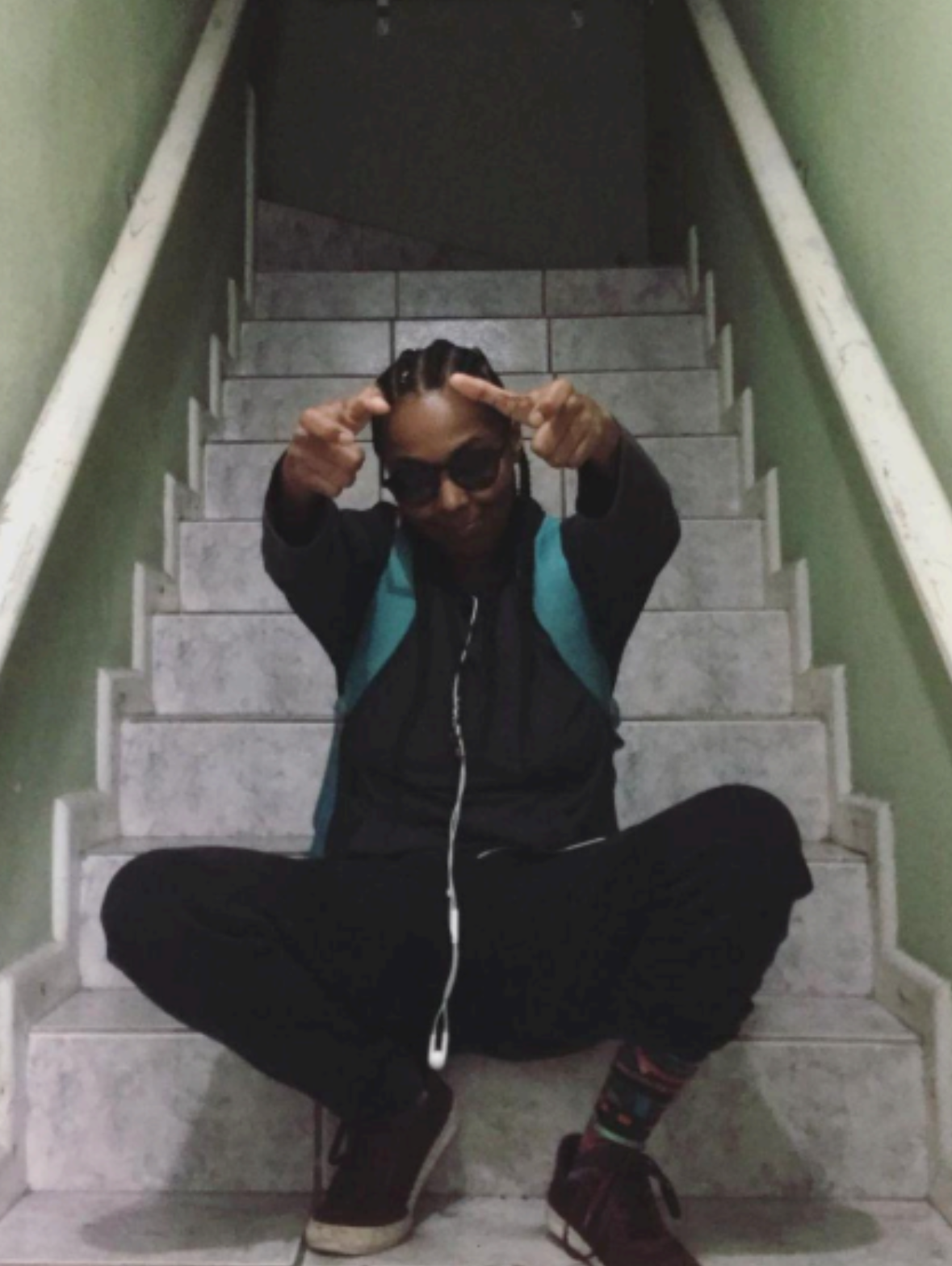
Luiza Nascimento, known as Nega Bula. Photo: Instagram.
Nega Bula also acknowledges the role of cannabis as part of her artistic and spiritual journey, highlighting how this plant intertwines with her music and worldview. For her,
cannabis is not just a recreational substance, but a tool for connection, introspection, and creativity, fueling her art and her fight for social justice. “Cannabis helps me slow down and connect with my roots, with what really matters. It is part of my culture and resistance,” she shares.
She also believes that rap can have a significant impact on various sectors of society. “If rap were present in politics, schools, and hospitals, it could promote a much greater transformation. Imagine poetry and sustainability workshops led by rappers,” she suggests.
Nega Bula emphasizes how rap transformed her personal life, helping her break free from the oppressive routine of a corporate job and allowing her to dedicate herself to her passion. “I worked at a private company in Rio Grande do Sul, but I always devoted my free time to rap. Today, living off rap and art is a dream come true. Rap allowed me to grow and find my true path,” she reveals.
Nega Bula is also the creator of the podcast "Leia a Bula" ("Read the Prescription"), which airs biweekly. In the podcast, she explores current trends, highlights emerging MCs and artists, and provides a space to discuss relevant issues within the rap universe. “The podcast is a way to exchange information and experiences. We talk about everything that’s happening in rap and keep the audience updated with what’s new,” Nega Bula explains. With a dynamic approach, "Leia a Bula" seeks to increase the visibility of artists and promote important discussions about the music scene. The podcast's presence on YouTube, Instagram, and Spotify is an extension of her work, helping to strengthen the network of support and engagement within hip hop culture.
FK
Franklin Pereira da Silva, known in the rap scene as FK, is an 18-year-old artist originally from Acre, a state in the northern region of Brazil. At the age of 15, FK moved to Florianópolis, the capital city of the southern state of Santa Catarina, in search of new opportunities. Before fully immersing himself in rap, he worked as a young apprentice, and after completing his contract, he decided to dedicate himself entirely to his passion for music. “I started rapping as a way to relieve stress, and I found purpose in rap. That’s how I got involved in battles and became the organizer of Batalha do Lago, one of the largest rap battles in Palhoça,” FK explains. (Palhoça is a city near Florianópolis known for its growing urban culture.)
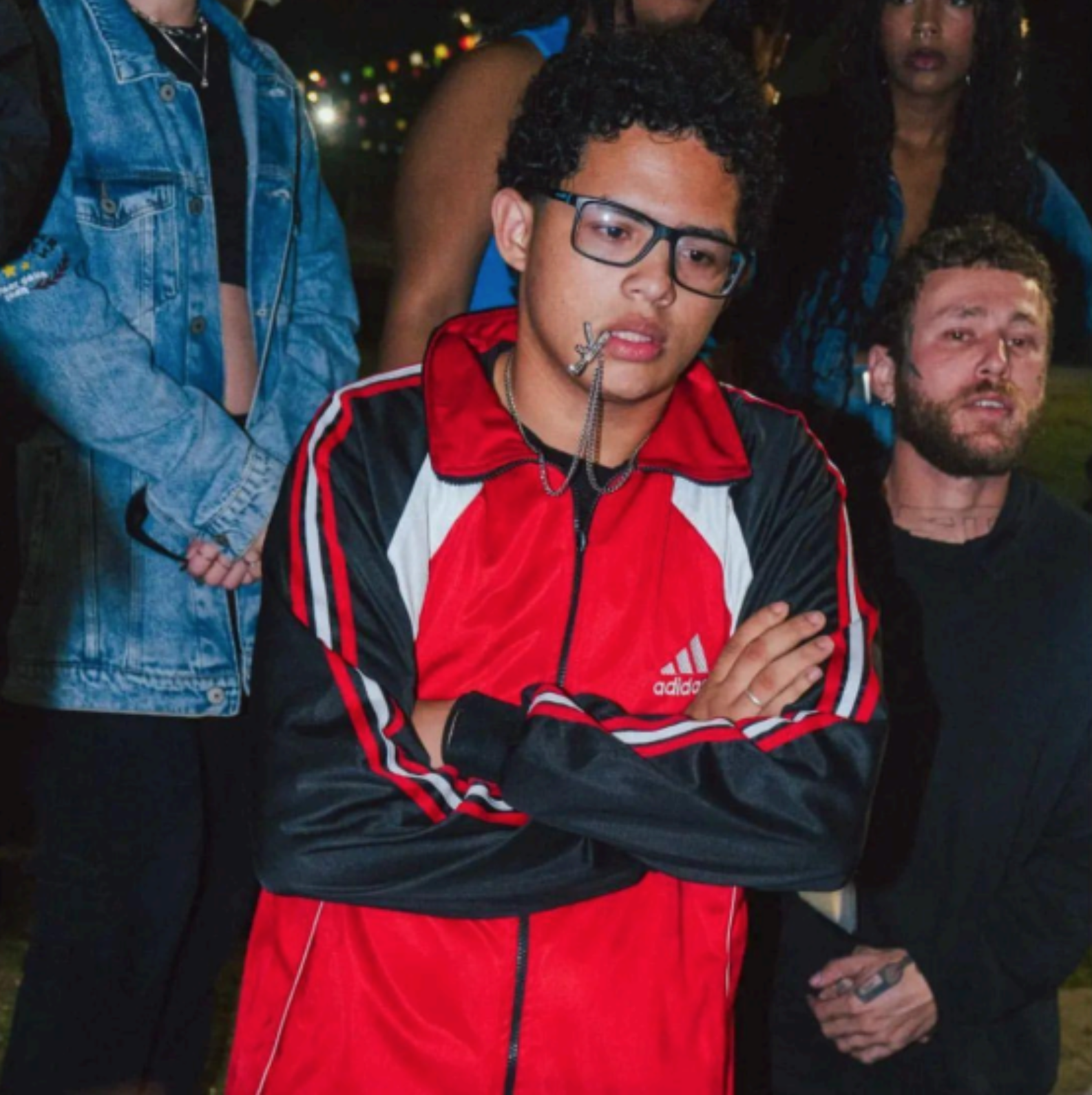
Franklin Pereira da Silva, known as FK. Photo: Instagram
For FK, rap is an essential form of expression in the fight against oppression and injustice. He emphasizes how often his presence as an MC draws suspicion and police pressure, simply because he is pursuing his passion. “Rap is the expression of what we feel, and even with the repression, we continue to speak our truths,” he asserts.
FK reveals that two years ago, he was involved in criminal activities, facing serious challenges and a chaotic lifestyle. "I was lost in a world of crime and involved with drug trafficking. But then God helped me change my path.” This transformation, driven by his involvement with rap, brought him a new perspective and sense of purpose.
For FK, rap is not just a form of expression but a tool for change and overcoming obstacles. He also sees a connection between his musical practice and the use of cannabis, which he considers a way to calm his mind and inspire creativity. "I smoke, man. I knew about cannabis before I got into rap, and it’s helped me see life more broadly and create with more depth," FK shares. Thus, both rap and cannabis play significant roles in his personal and artistic journey.
These figures are not just artists or MCs; they are also agents of social change. Each of them carries personal experiences that reflect the struggle against oppression, discrimination, and injustices faced daily in marginalized communities. They find in hip hop culture a form of resistance and often use cannabis as an integral part of their creative and spiritual expressions.
The Batalha da Alfândega, for instance, is a space where these voices find a stage for their narratives, intertwining art, politics, and the fight for the cannabis. For many, like Dre, WG, Nega Bula, and FK, rap is not just a musical genre but a powerful platform to challenge the status quo and promote personal and collective transformation. These stories reveal how the intersection of hip hop and the anti-prohibitionist movement contributes to the construction of a cultural identity that resists systemic impositions, always seeking the liberation and empowerment of marginalized communities.